
 Español
 한국어
한국어 العربية
 ไทย
ไทย
Ceiling cable tray
A ceiling cable tray is a support system installed overhead to route and protect electrical and communication cables in commercial, industrial, and institutional buildings. It provides a dedicated pathway for power, data, control, and instrumentation cables, keeping them organized, accessible, and safely separated from other building systems. By suspending cables from the ceiling, the tray frees up floor space, improves safety, and simplifies future expansion or modification of wiring.Typically, a ceiling cable tray is fabricated from steel, stainless steel, or aluminum, and may be finished with galvanizing, powder coating, or other protective treatments to resist corrosion. It is mounted using threaded rods, brackets, or hangers attached to the building structure, such as beams, slabs, or trusses. Properly designed supports maintain the required load capacity, spacing, and alignment, ensuring that the tray can withstand the weight of the cables and any additional installation loads.Several common tray configurations are used in ceiling installations. Ladder-type trays consist of two side rails connected by transverse rungs, offering high strength, excellent ventilation, and easy cable entry and exit along the run. Perforated trays have a solid bottom with regular slots or holes, providing better support for small-diameter or flexible cables while still allowing air circulation and some cable tie-down options. Solid-bottom trays fully enclose the underside of the cables, giving maximum protection from dust or falling debris, but with less ventilation and more attention required to heat dissipation.Routing design is essential when planning a ceiling cable tray system. Engineers consider cable type, current-carrying capacity, allowable bending radius, electromagnetic interference, and separation between power and data cables. The tray path typically follows corridors, production lines, or structural grids, with horizontal runs, vertical drops, tees, crosses, and elbows to reach equipment, panels, and distribution points. Careful planning minimizes the number of directional changes and elevation shifts, reducing installation time and potential stress on cables.Safety and compliance are key aspects of ceiling cable tray installation. Local electrical codes and standards specify allowable fill capacity, clearances from other services, support spacing, and bonding and grounding requirements. Capacity calculations ensure that the percentage of tray cross-sectional area occupied by cables remains within prescribed limits, allowing for adequate heat dissipation and room for future additions. Grounding and bonding components help maintain electrical continuity and reduce the risk of shock or interference.Maintenance is another advantage of ceiling cable trays. Because cables are visible and accessible from below, inspection, testing, and replacement can usually be performed without dismantling large portions of the system. Labels, color-coding, and neatly bundled groups support accurate identification and troubleshooting. Over the life of a facility, this accessibility translates into lower operating costs and shorter downtime during upgrades or repairs.In modern buildings where flexibility, safety, and scalability are priorities, ceiling cable trays provide a robust and adaptable infrastructure for managing complex cabling networks.
Products
Category:
Cable tray support arm
-
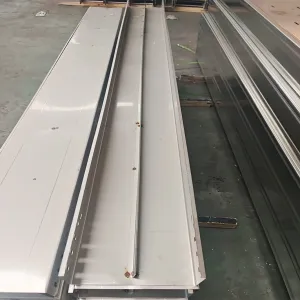
Stainless steel cable tray customization
Category: Stainless steel cable trayBrowse number: 183Number:Release time: 2026-06-07 16:01:48Our factory specializes in providing customized services for stainless steel cable trays, with a focus on high corrosion resistance, high strength, and zero rust non-standard customized solutions. We specialize in customized solutions for high corrosion, high cleanliness, and high severity working conditions that ordinary cable trays cannot handle. Made with precision using national standard stainless steel materials such as 304 and 316L, abandoning the limitations of standardized finished products, it can be customized one-to-one according to the construction site environment, installation st... -
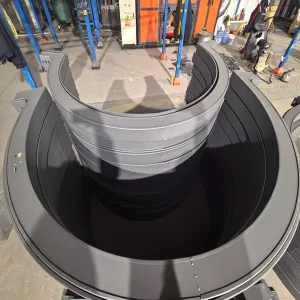
Non standard customized curved bend
Category: Non standard customized cable trayBrowse number: 142Number:Release time: 2026-06-07 17:59:55Non standard customized cable trays are mainly designed for special construction scenarios where standard stock trays cannot adapt, solving various wiring problems such as limited construction space, special wiring, irregular engineering drawings, and mismatched connections between new and old projects. Unlike standardized mass-produced products, non-standard cable trays are personalized and customized based on actual project conditions, on-site dimensions, and construction drawings. They are suitable for various complex, special, and unconventional mechanical and electrical wiring projects, f...
News
Category:
-
[Company News]Application fields of cable trays
2026-06-05 16:38:59
Case
Category:
No search results found!
Video
Category:
No search results found!
Download
Category:
No search results found!
Job
Category:
No search results found!
Featured Products
No search results found!



 Phone
Phone