
 Español
 한국어
한국어 العربية
 ไทย
ไทย
Adjustable cable tray
An adjustable cable tray is a versatile support system designed to route, protect, and organize electrical and communication cables in a wide variety of installations. Unlike traditional fixed-dimension trays, the adjustable type can be modified in width, height, and sometimes length to suit differing cable loads and complex site conditions. It is commonly used in commercial buildings, industrial plants, data centers, and infrastructure projects where flexibility and future expansion are important.The tray is usually made from steel, stainless steel, or aluminum, and may be finished with galvanizing or powder coating to improve corrosion resistance. Perforated and ladder styles are both available in adjustable forms. Perforated trays offer continuous support for small and delicate cables, while ladder trays provide high strength with reduced weight, making them suitable for power and control cables. Some models integrate both concepts, providing solid or perforated bottoms with side rails that can be repositioned.Key features of an adjustable cable tray include modular design, simple connection methods, and a range of accessories. Side rails, cross members, and bottom plates are often assembled with bolts or quick‑lock mechanisms, allowing the tray dimensions to be altered on site without special tools. Adjustable bends, tees, reducers, and risers allow routing in multiple directions and at varying elevations, which is especially useful in crowded mechanical rooms or above suspended ceilings.Ease of installation is one of the main advantages. Installers can adapt the tray to unexpected obstacles or last‑minute layout changes without fabricating entirely new sections. This reduces labor time and waste. The ability to fine‑tune the width and loading depth helps maintain correct cable fill ratios, improving heat dissipation and reducing the risk of cable damage. Many systems also include adjustable support brackets, hangers, and clamps, so the tray can be suspended from ceilings, fixed to walls, or mounted on floors and racks.From a maintenance perspective, adjustable trays simplify future modifications. When new cables need to be added, the tray can often be widened or reconfigured instead of replaced. Open construction allows visual inspection, easy cleaning, and quick troubleshooting. By clearly separating power, control, and data cables within the same adjustable framework, the system helps minimize electromagnetic interference and supports organized cable management.In environments with strict safety standards, adjustable cable trays can be designed to meet fire resistance, grounding, and bonding requirements. Optional covers, dividers, and barriers provide additional protection against mechanical impact, dust, or falling objects. Overall, an adjustable cable tray system offers a practical, economical, and scalable solution for modern cable routing, particularly in projects where adaptability and long‑term flexibility are essential design criteria.
Products
Category:
Aluminum alloy cable tray
-
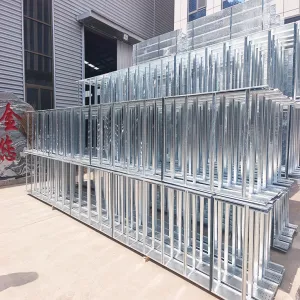
Recommended large-span integrated bridge frame
Category: Large span integrated cable trayBrowse number: 171Number:Release time: 2026-06-06 19:06:22In large open spaces, high clearance factories, and power corridor construction projects, large-span integrated cable trays are the high-end wiring profiles recommended by industry engineers. Compared to traditional segmented assembly cable trays, it perfectly solves common engineering problems such as multiple support points, multiple splicing gaps, easy shaking at high altitudes, and tedious maintenance in the later stage of conventional cable trays. It is suitable for infrastructure projects with high standards, high stability, and long-distance laying. The comprehensive construction experi... -
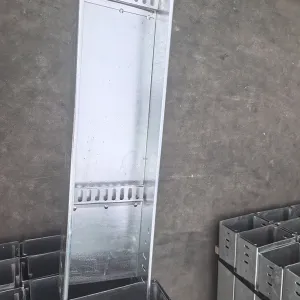
Specification of vertical shaft cable tray
Category: Vertical shaft cable trayBrowse number: 148Number:Release time: 2026-06-07 16:45:35The vertical shaft cable tray is designed specifically for the exclusive working conditions of building vertical shafts. The entire specification system is different from conventional horizontal cable trays, focusing on adapting to special construction requirements such as vertical load-bearing, narrow space in shafts, vertical heat dissipation, and layered wiring. The specification parameters conform to the national electrical construction standards for high-rise building mechanical and electrical installation, strong and weak current vertical shafts, and equipment tube shafts. It is a specia...
News
Category:
-
[Company News]Cable tray is a necessary material for engineering
2026-06-05 16:28:05
Case
Category:

Video
Category:
No search results found!
Download
Category:
No search results found!
Job
Category:
No search results found!
Featured Products
No search results found!



 Phone
Phone